Decorated Headwear at Scale: Caps, Beanies, and Bucket Hats for Large Orders
Headwear is one of the most visible branded products in any large program — and one of the most technically specific. Here's how decoration methods, construction choices, and quality tiers work for buyers ordering 100,000+ units.
Decorated headwear is a staple of large branded merchandise programs — corporate gifting, event merchandise, franchise uniforms, sports teams, and political campaigns all run significant cap volumes. But headwear has technical nuances that differ meaningfully from apparel. The decoration methods, construction choices, and quality considerations aren’t intuitive for buyers who are more familiar with shirt programs.
Here’s what you need to know to run a large headwear program effectively.
The Most Common Headwear Types for Large Orders
Structured 6-panel caps (the classic “baseball cap”): The dominant format for branded headwear. The structured front panels hold their shape, which is critical for embroidered logos. Available in snapback (plastic closure), flex-fit (elastic band), and adjustable strap configurations.
Unstructured 6-panel caps (“dad hats”): Softer, lower-profile, relaxed aesthetic. The unstructured front panel is more challenging for embroidery — designs with fine detail tend to shift as the fabric moves. More popular for fashion-forward or lifestyle brands.
Trucker caps: Foam front panels with mesh back panels. Very popular for outdoor, agricultural, and lifestyle brands. The foam front is an excellent embroidery surface — it holds shape better than woven fabric.
Beanies (cuffed knit caps): A staple for cold-weather programs and outdoor brands. Usually decorated with a woven or embroidered patch attached to the front, or with direct embroidery through the knit. Patch application is common at large volume because it’s more consistent across the variable texture of knit fabric.
Bucket hats: Growing in popularity for festival and lifestyle programs. Flat brim allows for embroidery or screen printing; the all-over print bucket hat (with sublimated or direct-printed fabric panels) is a premium option.
Decoration Methods for Headwear
Embroidery: The Standard
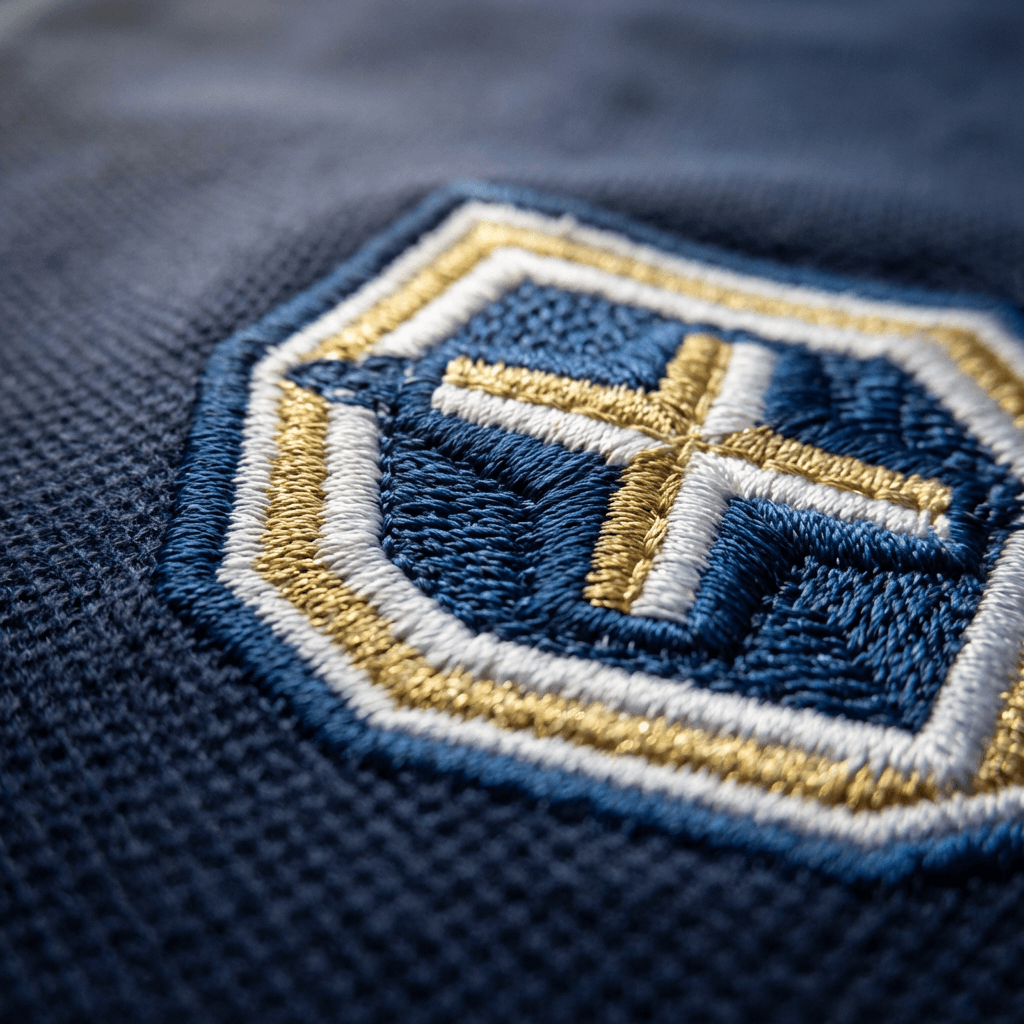
Embroidery is the dominant decoration method for headwear — it’s what most buyers expect, and it’s what the market associates with quality headwear branding.
Why embroidery dominates caps:
- The structured front panel is an ideal embroidery surface
- Thread doesn’t fade or crack the way ink can
- The dimensional, textured appearance reads as premium
- It survives repeated wear and laundering far better than most alternatives
Technical considerations:
- Stitch count matters: A typical left-front logo at 5,000–10,000 stitches is the sweet spot. Very dense designs at 15,000+ stitches can distort lighter-weight caps. See our embroidery stitch count guide for a full breakdown of how stitch count drives cost.
- Color count: Embroidery can reproduce multiple thread colors, but complex gradient designs don’t translate to thread. A 12-color screen print design will need to be simplified for embroidery — usually to 4–8 solid thread colors.
- Underlay: The base layer of stitching beneath the design affects how the logo sits on the fabric. A proper underlay is critical for clean registration on caps.
- Backing: The inside back of the embroidery — how it’s finished — varies by manufacturer. Cut-away or tear-away backing on caps affects comfort against the head.
Screen Printing on Headwear
Direct screen printing is used on the brim, side panels, and back hit of caps. It’s less common for front panel logos (embroidery is preferred there) but standard for secondary locations.
Full-brim print, side panel print, and back strap area printing are all done via screen printing or heat transfer depending on the surface. For trucker caps, flat front panels can accept screen printing cleanly.
Patch and Transfer Options
For programs where embroidery minimums, timelines, or decoration complexity don’t fit, a woven or embroidered patch offers an alternative:
- Woven patches: Produced separately, then sewn or heat-sealed onto the cap. Allows finer detail than direct embroidery because a woven patch operates at a finer scale.
- Embroidered patches: Same process as direct embroidery, but done on a separate backing and then applied. The advantage is production flexibility — patches can be produced in bulk and applied to different cap styles.
- PVC patches: Molded rubber/silicone patches that convey a premium, modern feel. Popular for outdoor and performance brands. Heat-pressed or stitched onto caps.
- Leather patches: Genuine or faux leather patches with embossed or debossed branding. Popular for premium lifestyle and heritage brands. Higher per-unit cost.
Quality Tiers: What Separates a $6 Cap from a $25 Cap
At large volume, the cap quality you select dramatically affects both end-user perception and per-unit cost.
Value tier ($4–$8 wholesale):
- Brands like Yupoong, OTTO, Pacific Headwear at entry level
- Poly/cotton blend fabric or brushed cotton
- Functional but not premium — acceptable for event merchandise with short lifecycle
- Often imported; quality consistency can vary
Mid-tier ($8–$14 wholesale):
- Better fabric quality — often higher-weight cotton or structured ripstop
- Improved fit and construction
- Branded hardware (metal buckles, eyelets) vs. plastic
- More consistent quality across a large production run
Premium tier ($15–$30+ wholesale):
- Brands like Richardson, Flexfit, American Needle
- Premium materials: wool blends, leather sweatbands, structured crown construction
- These are the caps recipients keep and wear long-term — high brand impression value
- Appropriate for executive gifting, premium retail, or any program where the cap is the product, not just a promotional item
At 100,000 units, the difference between a $6 cap and a $12 cap is $600,000. That’s a real budget decision, not a trivial one. The right tier depends entirely on end-use, brand standards, and program objectives.
Sizing and Fit
Unlike apparel where sizes map to specific measurements, cap sizing options are:
One size fits most (OSFM): Most snapback and adjustable strap caps. The closure accommodates a range of head sizes. Works for most programs where you’re not collecting individual sizes.
Flex-fit / stretch fit: Available in S/M and L/XL (or single size for some styles). The elastic band provides a closer, more finished fit. Requires a simple size collection — typically just asking for S/M or L/XL preference.
Fitted caps: Specific hat sizes (6 7/8, 7, 7 1/8, etc.). Used primarily in athletic and professional sports team contexts. Requires full size curve management similar to apparel — significantly more planning complexity than OSFM.
For most large branded programs, OSFM snapback or flex-fit options eliminate size curve complexity entirely. This is one of headwear’s practical advantages over apparel programs.
Lead Times
Headwear production timelines are similar to apparel with a few considerations:
- Direct embroidery on caps is slower per unit than apparel screen printing — multi-head embroidery machines do 6–12 caps at a time vs. continuous-feed apparel printing
- Patch production adds 1–2 weeks if patches are produced separately
- Custom caps (custom fabric color, custom closure, custom construction) require longer lead times than stock-style caps
- Imported headwear has transit time in addition to production time — typically 4–6 weeks ocean freight from Asia
For US-produced or US-decorated programs at 100,000+ units, plan 6–10 weeks from order confirmation to delivery, consistent with apparel programs of similar complexity. See our event merchandise planning timeline for a detailed stage-by-stage breakdown if you’re working toward a hard deadline.
Merch Factory Direct produces decorated headwear at scale for corporate, franchise, event, and retail programs. See our embroidery capabilities and screen printing capabilities, or our full decoration capabilities overview. For decoration method comparisons, see screen printing vs. embroidery for large orders. Contact us to discuss your headwear program.