Screen Printing vs. Embroidery for Large Orders: Which Is Right?
Deciding between screen printing and embroidery for a 100,000+ unit order? Here's a practical breakdown of cost, durability, aesthetics, and application — for buyers ordering at scale.
For buyers placing large-volume decorated apparel orders, the choice between screen printing and embroidery is one of the first and most consequential decisions in the production process. It affects cost per unit, turnaround time, the types of garments you can use, and the overall aesthetic of the finished piece.
This isn’t a case where one method is universally better. They serve different purposes and communicate different things. Here’s how to think through the decision for a large-scale order.
The Core Difference
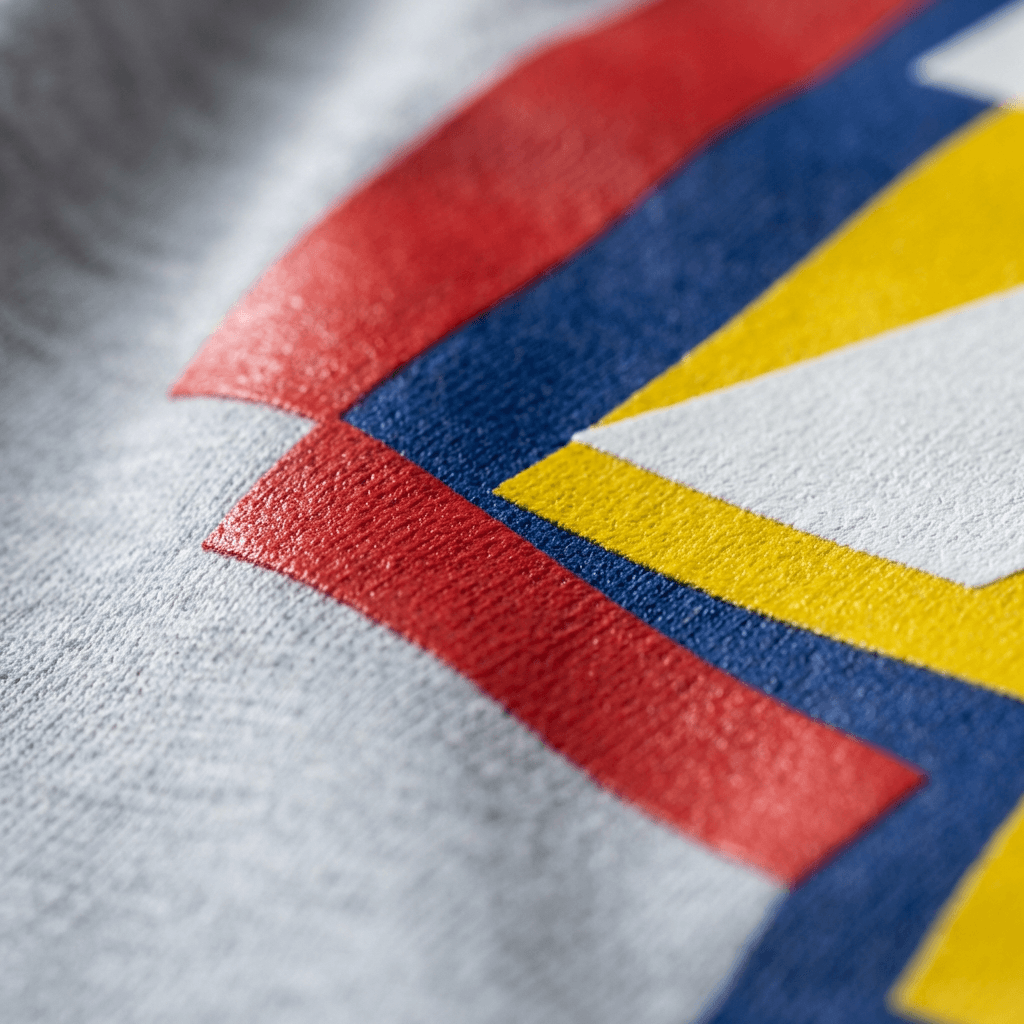
Screen printing applies ink directly to the fabric surface through a mesh screen. It’s flat, it can cover large areas, and at high volume it’s fast and cost-efficient.
Embroidery stitches thread directly into the fabric. It’s dimensional, tactile, and conveys a premium feel that screen printing can’t replicate.
At 100,000+ units, both methods are feasible. The question is which one fits your application.
Cost: Screen Printing Usually Wins at Scale
For pure cost-per-unit, screen printing is almost always less expensive than embroidery — especially at large quantities.
Screen printing cost drivers:
- Ink colors (more colors = more screens = higher setup)
- Print size and coverage area
- Type of ink (plastisol is least expensive; water-based and discharge cost more)
- Number of print locations
Embroidery cost drivers:
- Stitch count (the biggest driver — a 5,000-stitch logo costs much less than a 20,000-stitch design)
- Stabilizer requirements (depends on fabric)
- Number of embroidery locations
- Digitizing (converting your art to stitchable format)
A standard left-chest embroidery logo at 5,000–8,000 stitches is reasonably cost-effective. A complex full-back embroidery design at 25,000+ stitches can be expensive — sometimes enough to make screen printing the obvious choice.
At 100,000 units, a typical screen print might run $1.50–$3.00 per unit for decoration. A typical embroidery logo at the same quantity might run $2.50–$5.00+ depending on stitch count.
Aesthetics: Different Tools for Different Messages
This is where the decision often gets made, independent of cost.
Screen printing signals:
- Casual, everyday wear
- Bold graphics and large artwork
- High-color vibrancy
- Fashion-forward or streetwear aesthetics
- Event merchandise and fan apparel
Embroidery signals:
- Premium quality and durability
- Professional and corporate contexts
- Traditional brand presentation
- Workwear and uniform programs
- Executive gifting and premium merchandise
A festival t-shirt at 80,000 units screams screen print. A corporate polo program at 70,000 units screams embroidery. An athletic uniform at 100,000 units might use both — screen print for the number on the back, embroidery for the logo on the chest.
Fabric Considerations
Not all fabrics work equally well for both methods.
Screen printing works well on:
- 100% cotton and cotton/poly blends (standard tees and fleece)
- Flat knit surfaces
- Non-stretchy, stable fabrics
- Bags, accessories, and hard goods (with appropriate ink)
Screen printing is difficult on:
- Fine knits and performance fabrics (the surface distorts under the squeegee)
- Highly textured materials
- Very sheer fabrics
- Some synthetic fabrics (adhesion issues with certain inks)
Embroidery works well on:
- Most stable wovens and knits
- Polos, oxfords, and structured shirts
- Caps and structured headwear
- Fleece and medium-weight fabrics
- Denim and canvas
Embroidery is difficult on:
- Very fine, delicate fabrics (needle holes are visible)
- Highly stretchy fabrics (design distorts unless properly stabilized)
- Very thin materials where backing shows through
- Some performance fabrics
Durability: Both Are Excellent at Scale — With Caveats
When done correctly, both methods produce highly durable decoration.
Screen printing durability:
- Plastisol ink is extremely durable and washfast
- Water-based ink can be softer and more breathable but requires proper curing
- Quality varies significantly by ink type and cure temperature
- Cracking and fading are symptoms of incorrect curing or ink selection, not an inherent weakness of screen printing
Embroidery durability:
- Thread is essentially permanent — it doesn’t fade in washing the way inks can
- Well-stabilized embroidery maintains shape and registration across many wash cycles
- Poor stabilization leads to puckering and distortion over time
For workwear and uniforms that will see industrial laundering, embroidery generally has the edge in long-term durability.
Turnaround: Screen Printing Is Typically Faster
For equivalent quantities, screen printing production is generally faster than embroidery. Embroidery machines stitch one piece at a time (or a small number simultaneously on multi-head machines). Screen printing applies ink to many pieces per hour on a high-speed automated carousel.
For a 100,000-unit embroidery order, production time is significantly longer than a 100,000-unit screen print order at the same facility.
The Hybrid Approach
Many large orders use both methods on the same garment or across a product assortment:
- Left chest embroidery + back screen print (common on polos)
- Embroidery for premium styles, screen print for basic styles within the same program
- Embroidery for structured items (caps, bags), screen print for apparel
At 100,000+ units, a skilled manufacturer can run both decorations efficiently within a single production program.
Decision Framework
Choose screen printing if:
- You need the lowest possible cost per unit
- Your design has large coverage areas or bold graphics
- The garment type is standard cotton/poly (tees, fleece)
- The aesthetic is casual, athletic, or event-oriented
- Turnaround time is a priority
Choose embroidery if:
- Premium quality perception matters
- The application is corporate, uniform, or professional
- The garment is a polo, dress shirt, or structured item
- Long-term durability through repeated washing is required
- Your brand aesthetic calls for a traditional, premium look
Consider both if:
- You have multiple styles in the program with different aesthetics
- You want embroidery on a premium version and screen print on a standard version
- The garment has multiple decoration locations that suit different methods
Merch Factory Direct produces screen printing, embroidery, and mixed-decoration programs for buyers at 100,000+ units. See our full decoration capabilities, or get a quote and we’ll help you determine the right method for your order.