Embroidery Stitch Count: What It Is and Why It Drives Your Per-Unit Price
Stitch count is the single biggest driver of embroidery cost per unit. Here's what it means, how designs translate into stitch counts, and how to reduce count without compromising your logo.
If you’ve ever gotten an embroidery quote and wondered why two logos that look similar in size produce very different prices, stitch count is almost always the answer. It’s the primary unit of measure for embroidery production — and understanding it puts you in a much better position to plan, budget, and optimize a large-volume order.
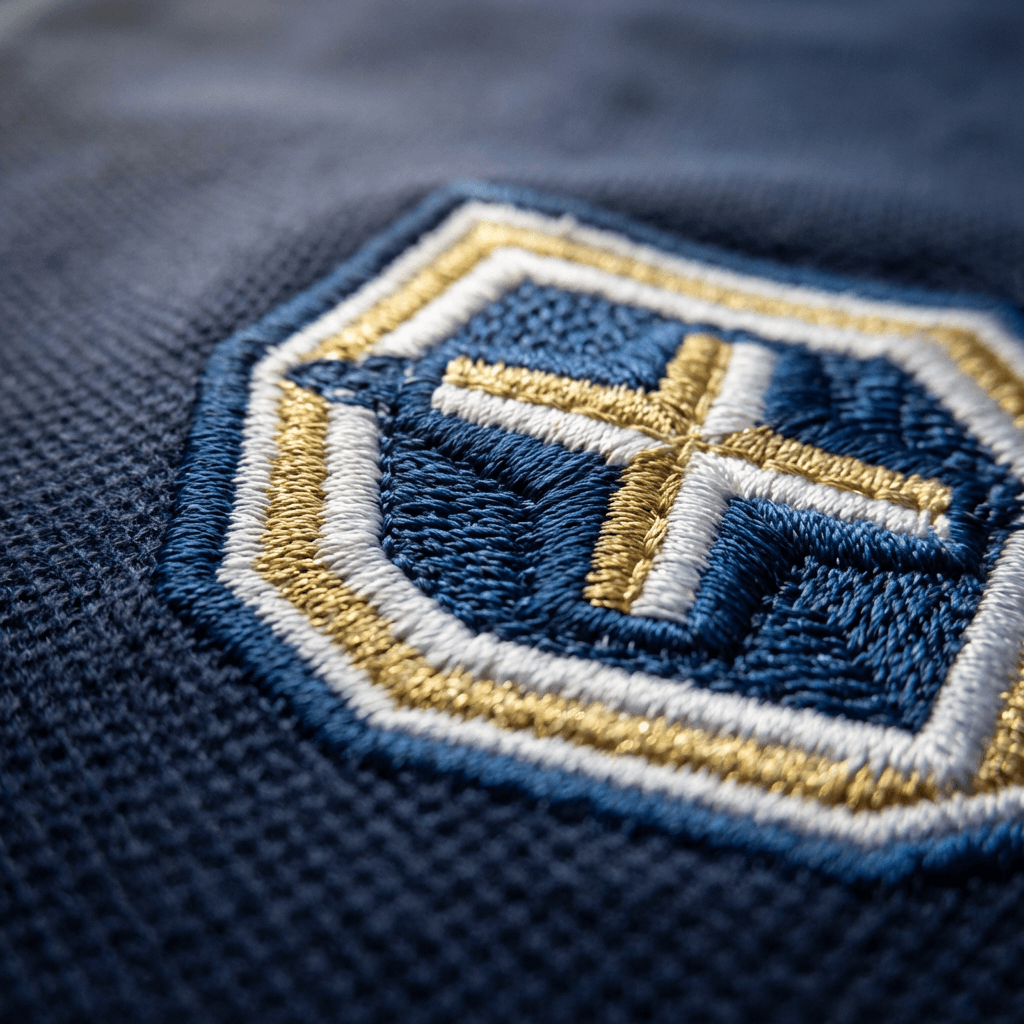
What Stitch Count Actually Means
Stitch count is exactly what it sounds like: the total number of individual needle penetrations in an embroidered design. A machine stitches one thread at a time, and every thread placement is one stitch.
A simple three-letter monogram might be 2,000 stitches. A complex full-color corporate logo might be 15,000. A detailed full-back embroidered design could exceed 50,000.
Stitch count matters because embroidery machines run at a fixed speed (typically 600–1,000 stitches per minute, depending on design complexity and fabric). More stitches = more machine time. More machine time = higher cost per unit. The relationship is essentially linear.
Typical Stitch Count Ranges
| Design Type | Typical Stitch Count |
|---|---|
| Simple text, 3–4 letters | 1,500–3,000 |
| Standard left chest logo | 4,000–8,000 |
| Complex left chest logo | 8,000–15,000 |
| Cap front logo | 5,000–10,000 |
| Full sleeve design | 8,000–20,000 |
| Full back logo/design | 20,000–100,000+ |
| Highly detailed full back | 50,000–100,000+ |
These are ranges — your actual count depends on the specific artwork. The only way to know exactly is to have the design digitized.
Why Stitch Count Compounds at Scale
At 1,000 units, the difference between an 8,000-stitch logo and a 12,000-stitch logo is meaningful but manageable. At 100,000 units, that same difference multiplies significantly.
Example:
- 100,000 units × 8,000 stitches = 800 million total stitches
- 100,000 units × 12,000 stitches = 1.2 billion total stitches
That’s 400 million additional stitches — substantial machine time and thread cost across the run. If the 12,000-stitch version costs $0.50/unit more than the 8,000-stitch version, that’s $50,000 on a 100,000-unit order.
At scale, stitch count is worth optimizing.
What Is Digitizing?
Digitizing is the process of converting artwork — a logo, illustration, or text — into a stitch file that an embroidery machine can execute. It’s not an automatic conversion. A skilled digitizer makes decisions about stitch types, directions, density, underlay, and sequencing that determine both how the design looks and how efficiently the machine produces it.
The same logo digitized by two different people can have very different stitch counts and very different results on fabric.
For large-volume orders, digitizing for production efficiency matters. A digitizer optimizing for speed at 100,000 units approaches the job differently than one digitizing a one-time sample. The file they produce should minimize unnecessary stitches without compromising visual quality.
How to Reduce Stitch Count Without Hurting Quality
Simplify fine details. Fine lines, small text, and intricate details require dense stitching to hold shape. Simplifying or slightly enlarging small design elements reduces the stitch density needed.
Use run stitches instead of satin for fills. Satin stitches (which create the smooth, shiny appearance in embroidery) are dense and high-count. For large fill areas that don’t need sheen, tatami or fill stitches use fewer stitches per square inch.
Reduce the number of color changes. Every color change requires a trim and a new thread start — which adds stitches and machine time. Consolidating colors where possible reduces this overhead.
Don’t embroider what should be screen printed. Very large-area designs are almost always better suited to screen printing. Embroidery is most cost-effective as an accent — a logo, a small design element, a monogram. When buyers try to embroider large graphic designs, stitch counts become enormous and quality often suffers.
Resize the design down. Smaller design = fewer stitches. If the design is currently sized for a full-back application, consider whether a chest or sleeve application meets the brand goal at a fraction of the stitch count.
What to Ask Before You Commit
When getting quotes for a large embroidery order, ask:
- What is the estimated stitch count for this design? This should be provided upfront or after digitizing.
- Is the digitizing done in-house? In-house digitizers can be directed to optimize for production efficiency.
- What is the price per unit at this stitch count? Confirm the stitch count the quote is based on so you can compare accurately across vendors.
- Can you show me a digital strike-off before production? A preview lets you catch quality issues before 100,000 units are stitched.
Merch Factory Direct digitizes in-house and provides stitch count estimates before production for all orders of 100,000+ units. If you’re weighing embroidery against screen printing, see our comparison guide, or get a quote.