Pantone Matching in Screen Printing: Why Brand Color Accuracy Matters at Scale
At 100,000+ units, color consistency isn't just an aesthetic concern — it's a brand standards issue. Here's how Pantone matching works in screen printing and why it matters for large-volume buyers.
Color is one of the most powerful and most fragile elements of a brand. Studies consistently show that color increases brand recognition by up to 80%. It’s also one of the easiest things to get wrong at scale — and one of the hardest to notice until you’re holding 100,000 shirts where the orange is subtly wrong.
For large-volume buyers, Pantone color specification is the difference between brand-consistent output and “close enough.”
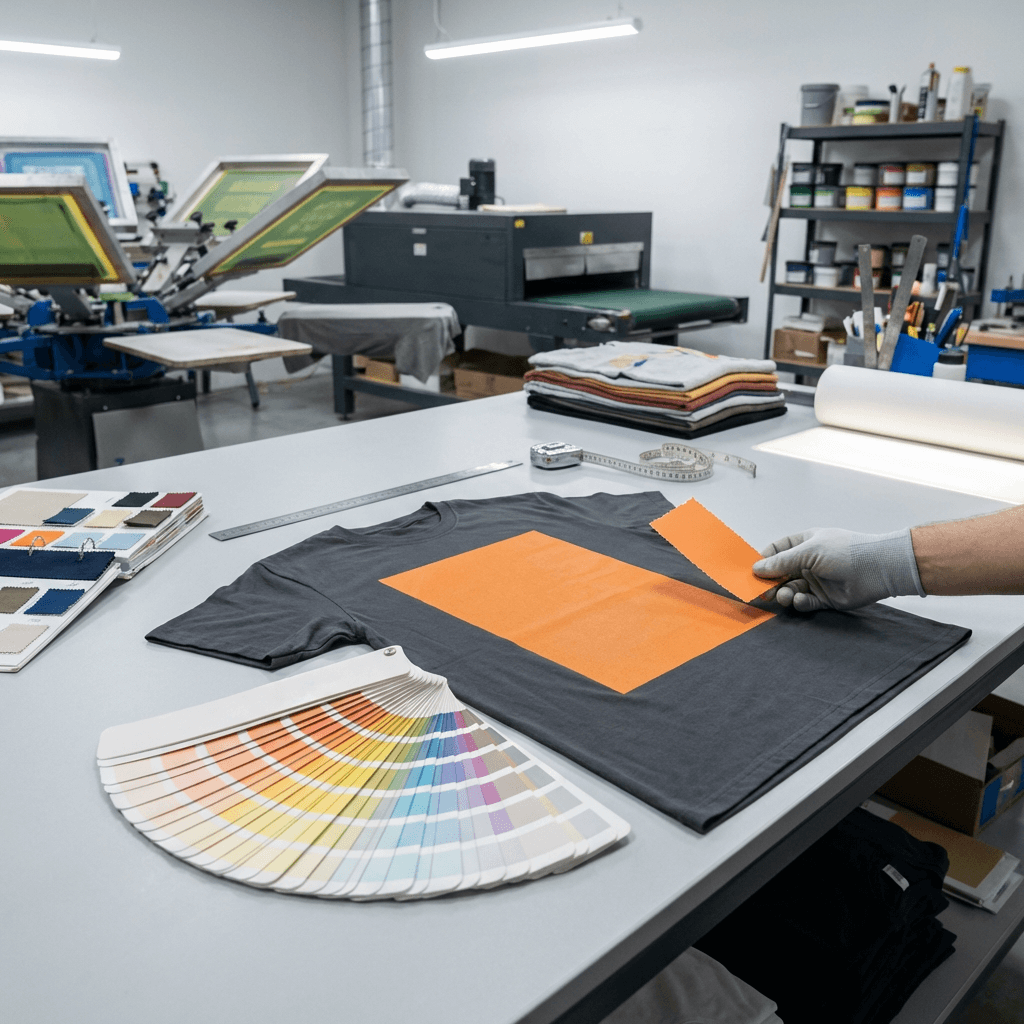
What Pantone Is and Why Screen Printers Use It
The Pantone Matching System (PMS) is a standardized color language. Each Pantone color has a specific formula — the exact mix of pigments that produces that color when mixed correctly. A PMS number specifies not just a color, but a recipe.
Screen printing inks are mixed from base pigments. When a screen printer has a PMS number, an ink mixer can follow the Pantone formula to produce a match. The result is predictable and reproducible — the same PMS number mixed at the same facility on the same press should produce the same ink color run after run.
This predictability is what makes Pantone the standard for brand color management in print production.
What Happens Without Pantone Specs
When a buyer says “match this hex code” or “match this CMYK value” instead of providing a Pantone number, the printer has to interpret that into an ink mix — which is a guess. Different printers may guess differently. The same printer may guess differently on repeat orders. Results drift.
Hex codes are screen colors (RGB light-based), not print colors (ink-based). The gamut of printable colors and the gamut of screen colors don’t perfectly overlap. Converting hex to Pantone is approximate, and different tools make different approximations.
At 100,000 units, this approximation becomes visible: a batch of shirts where the logo blue looks slightly more purple than the last run. A corporate polo where the red is closer to orange than it was on the prior order.
These discrepancies are avoidable. Specifying Pantone numbers eliminates the interpretation step.
Pantone Coated vs. Uncoated: The Right Specification
Pantone publishes different guides for different substrates. For screen printing on fabric, the relevant guides are:
Pantone C (Coated): Colors formulated for coated paper and surfaces. Often used in print design.
Pantone U (Uncoated): Colors formulated for uncoated surfaces, closer to how inks behave on fabric.
Pantone TCX (Textile Color eXtended): Specifically formulated for textile applications. If your brand standards include TCX numbers, use them.
A color that looks identical in Coated and Uncoated versions of the Pantone guide may print slightly differently on fabric. If your brand has formal color standards, they may specify different Pantone numbers for different applications. Know which system your standards reference.
Ink on Fabric vs. Ink on Paper
Even with a correct Pantone number, ink on fabric doesn’t look identical to ink on paper. Factors that affect final color appearance include:
Fabric color: Ink is somewhat transparent. Printing red on a white shirt produces a different final color than printing the same red on a light grey shirt. For dark garments, an underbase (a white ink layer beneath the color) is required to achieve accurate color.
Fabric texture: Smooth fabrics produce more consistent ink coverage than textured ones. A heathered or tri-blend fabric will show subtle texture through the ink, affecting perceived color.
Ink opacity: Some pigments are more opaque than others. Higher-opacity inks cover the garment color more completely; lower-opacity inks blend with it.
Ink type: Plastisol and water-based inks have different inherent sheens and opacities that affect how they look on fabric.
A pre-production sample (strike-off) on the actual garment is the only way to confirm the final color before committing a full run to production.
Color Consistency Run to Run
For programs that reorder — a corporate uniform program, a franchise system, a retail brand with seasonal replenishment — color consistency across runs is as important as color accuracy on the first run.
The mechanisms that ensure run-to-run consistency:
- Pantone specification on file: The approved Pantone numbers are stored with the program and referenced every run.
- Ink mix record: The actual formula used to achieve the approved color is recorded. If there’s drift between runs, the mix can be adjusted back.
- Production approval process: The first piece off the press is checked against the spec before the full run continues.
Without these systems in place, color drift across reorders is common — and often not caught until someone lines up shirts from different runs side by side.
Merch Factory Direct uses Pantone-matched inks and maintains color records for all recurring programs. For full pre-press requirements, see our artwork preparation guide, or get a quote for your 100,000+ unit order.